In July 2023, the New Mexico Supreme Court (“NMSC”) disbarred a respected New Mexico attorney, Mr. Victor R. Marshall, for raising a valid judicial conflict of interest in a court case. “Matter of Victor R. Marshall,” NM Docket No. S-1-SC-37698.
This is a 3-part article. Part 1 explores judicial ethics basics. Part 2 provides background information on the case. This part, Part 3, explains the conflict of interest between Judge Wechsler and the Navajo Nation.
In summary, the NMSC disbarred Mr. Marshall for complaining about a judge ruling in favor of the Navajo Nation, despite the same judge having lived and worked on the Navajo Nation, a clear violation of judicial conflict of ethics rules. The disbarment of Mr. Marshall by the NMSC was dishonest and deplorable, will likely have a chilling effect on judicial accountability in the State of New Mexico, and shows the increasing political corruption of the New Mexico Supreme Court.
Part 3 of 3: The judge’s connections with the Navajo Nation
1. Judge Wechsler lived and worked on the Navajo Nation.
According to his own resume, Judge Wechsler lived and worked in Crownpoint, New Mexico, from November 1970 to July 1973. Crownpoint is a small rural community in Northern New Mexico, approximately 67-square miles, and with a population of less than 3,000.
Crownpoint is located on the Navajo Nation. While technically anyone can live in Crownpoint, the vast majority of the population — approximately 90% — are Navajo. Moreover, Crownpoint is an major administrative hub for the Navajo Nation and many Navajo Nation resources and administrative offices are located there.
The document below is from official court records.
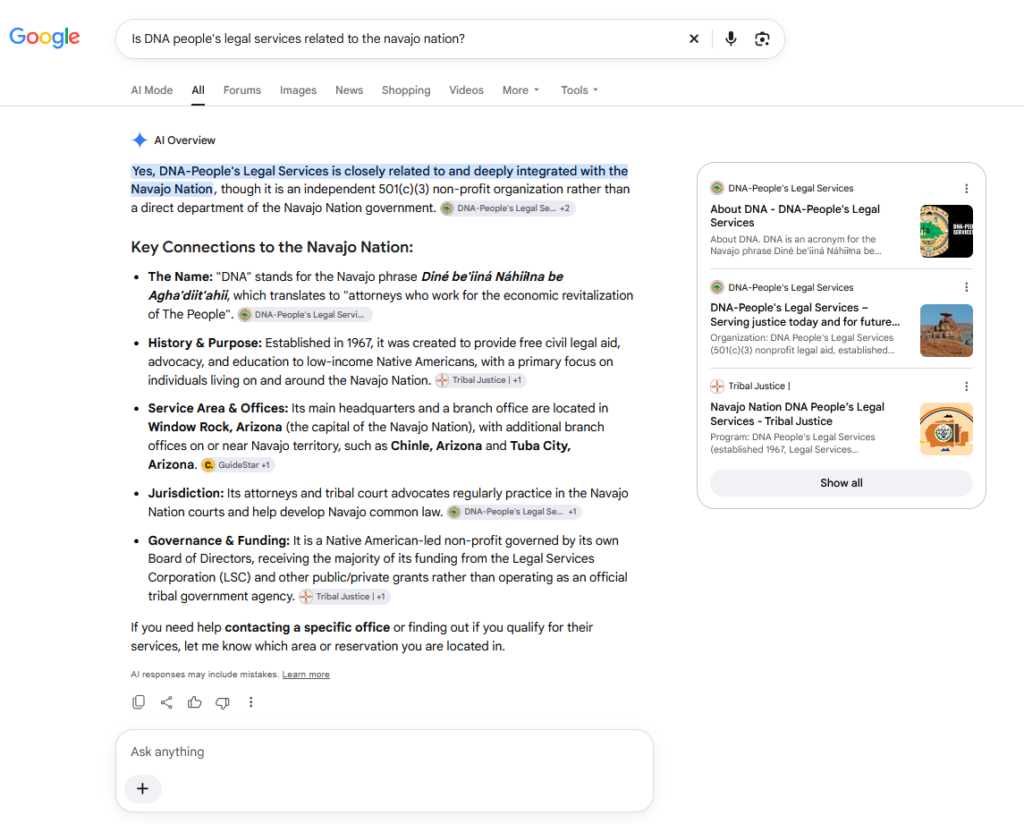
2. Judge Wechsler worked as an attorney for “DNA People’s Legal Services,” a non-profit closely related to the Navajo Nation.
MoreWhile living and working on the Navajo Nation, Judge Wechsler worked as an attorney for “DNA People’s Legal Services.” DNA is a non-profit organization that provides legal aid to native americans, as well promoting tribal sovereignty for the Navajo Nation. In Mr. Marshall’s case, the NMSC disingenuously downplayed the connection between DNA and the Navajo Nation, because technically, on paper, DNA is an independent legal organization. In reality and in fact, even according to Google AI, DNA as a legal organization is “closely related to and deeply integrated with the Navajo Nation…”
3. DNA People Legal Services was already exploring water litigation as “absolutely vital” to the Navajo Nation, when Judge Wechsler worked there.
Although Judge Wechsler denied working on water litigation while an attorney for DNA People’s Legal Services, DNA newsletters from around the time Judge Wechsler was working on Crowpoint evidence, unequivocally, that water litigation was already very much on the map for the Navajo Nation, decades before Judge Wechsler would award Navajo Nation a staggering amount of water rights.
The document below is from official court records.
Conclusion
Judicial conflicts of interests are governed by different standards. The New Mexico Supreme Court found no “clear and convincing evidence” of a conflict of interest or bias between Judge Weschler and the Navajo Nation under one standard. That determination is suspect given the evidence addressed above.
Moreover, under the well-known standard of the “appearance of impropriety,” a lesser general legal standard for evaluating judicial conflicts of interests, there was sufficient evidence to find that the relationship between Judge Weschler and the Navajo Nation created an appearance of impropriety.
In other words, to the average reasonable individual, Judge Weschler should not have presided over the San Juan Adjudication Cases, given his previous relationship with the Navajo Nation and DNA People Legal Services.